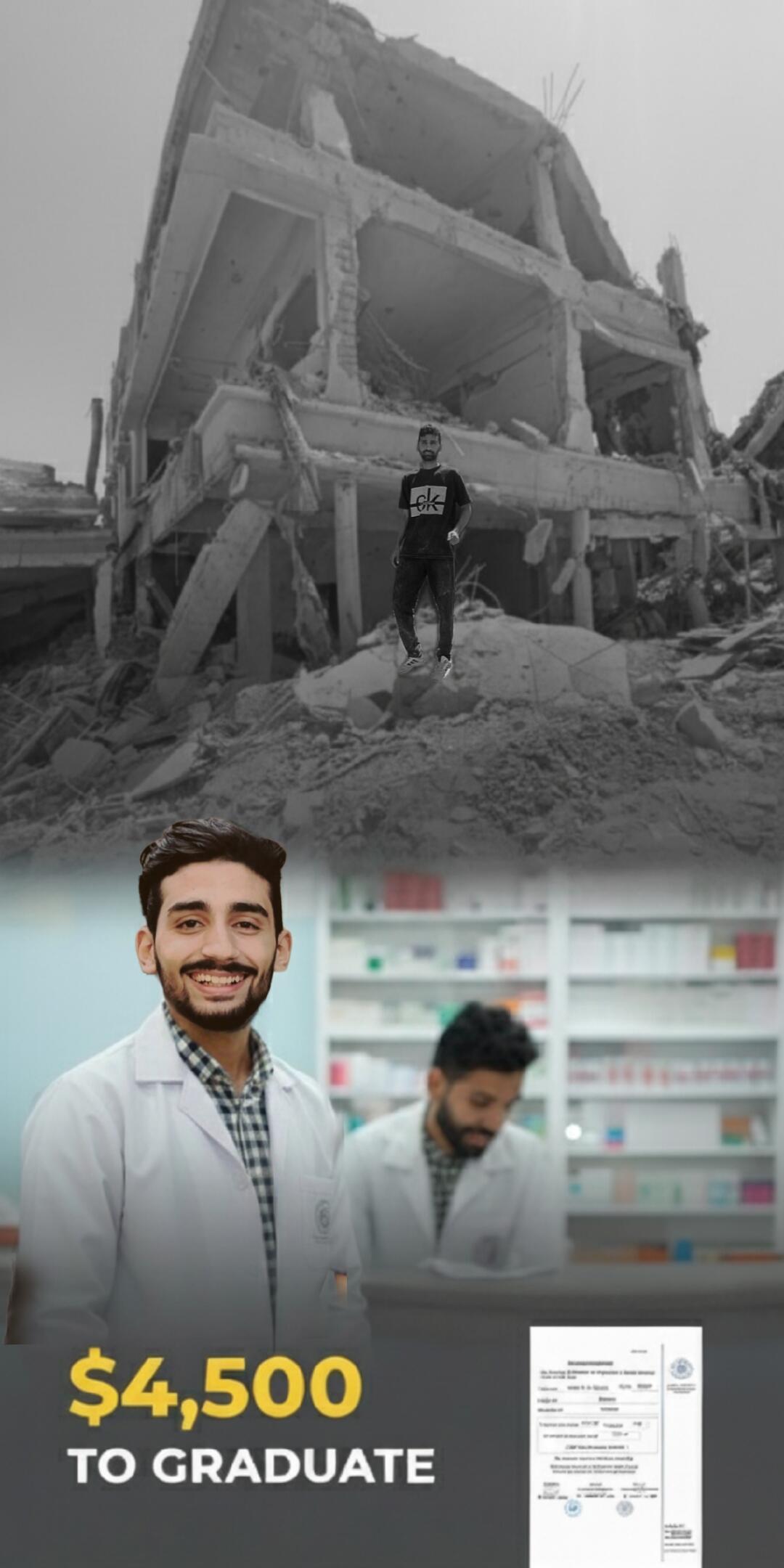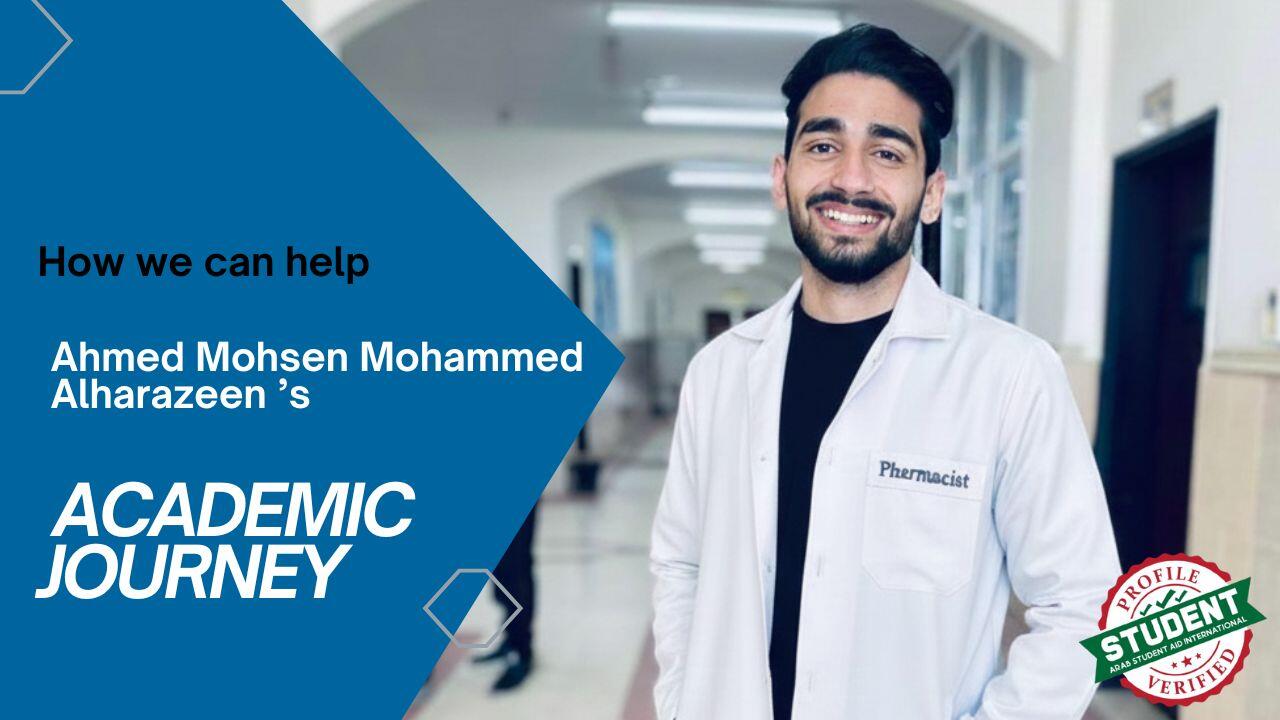
Since my childhood, I have seen pharmacy as more than a field of study—it is a way to heal fear before illness. In Gaza, where people seek safety even in the medicine they take, I realized that this field is the path through which I can truly serve my community. That is why I chose to study pharmacy—not merely for a job, but to be part of a force that builds hope and care in a place where safety often crumbles.
One particular event changed my perception of the profession entirely and planted in me a level of ambition I had never known before. During my training at a hospital, the pharmacist responsible for the pharmacy was tragically killed. Suddenly, I found myself alone in the pharmacy, with people waiting at the door for their medications, looking for guidance, reassurance, and help. I had no choice but to step forward and take responsibility until another pharmacist could be assigned.
In those intense hours, I realized that society does not just need a pharmacist; it needs a human being willing to stand and serve others even in the face of fear. That moment became a turning point, making me understand that pharmacy is not merely a profession—it is a mission.
However, completing this mission has not been easy. Five years of studying pharmacy were full of challenges that students elsewhere might never face. I grew up in a family of 15 members, carrying heavy responsibilities while living under financial constraints. I often studied by candlelight during electricity outages, memorized lectures amid the sounds of explosions, and moved between classes with the constant worry: Can I pay the tuition this semester? Will my future be stopped by a number I cannot afford?
Despite all my efforts and hard work, $4,500 in accumulated tuition fees remain unpaid after graduation—a sum far beyond my family’s capacity, blocking my ability to receive my degree and pursue any step toward the future or apply for scholarships.
This is where donor support becomes truly transformative. For me, financial contributions are not just assistance for overdue fees—they are the key that opens a door long closed. Donor support will allow me to obtain my degree, pursue graduate studies, apply for master’s scholarships, and launch my professional career in a field that is urgently needed in my community.
Financial assistance would profoundly change my life:
It would move me from a state of worry and waiting to action and opportunity.
It would enable me to practice pharmacy legally and professionally.
It would open doors to advanced fields in clinical pharmacy, public health, and therapeutic care.
It would empower me to support my large family despite the harsh living conditions we face.
Most importantly, it would give me the ability to give back to the community that nurtured me and to the patients who rely on pharmacists who can serve them with honesty and compassion.
Today, I am not asking for an opportunity for myself alone, but for the chance to return and make a difference in the lives of others—just as I did on that day in the hospital when I had to stand in place of the pharmacist who had been lost.