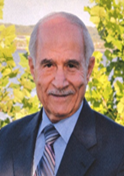
From Amman to Australia: Bassem Zreiqat’s Life Transformed by ASAI Support

Bassem Zreiqat’s Life Transformed by ASAI Support

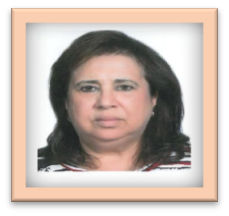
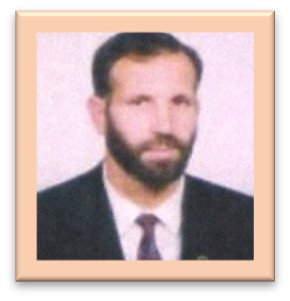
Basem Zreiqat

I attended high school in Amman and graduated in 1979.  I attained a 90.6 average in the government national high school exams (Al-Tawjeehi).  I knew it would be difficult for me to apply to universities overseas as my family could not afford it.  I wanted to study computer science as I was fascinated with the relatively new technology at that time, as the use of computers was increasing rapidly.  One day that summer a friend of mine told me about ASAI and asked me if I would like to go with him to apply for a student loan.  At the time we met with Mr. Issam Zawawi who was the ASAI rep in Amman.  Mr. Zawawi was very welcoming and explained the acceptance conditions.   We both applied and a couple of months later I was notified that I got accepted to study at Monmouth University in NJ, USA, for a Computer Science degree.  I was over the moon and started preparations to go to USA as the school was due to start in late January 1980.  I want to take this opportunity to give credit to Mr. Zawawi who helped me to complete the application and kept in touch with me until the acceptance was received.  Without Mr. Zawawi’s assistance and direction I would not have had the opportunity to complete my higher education.

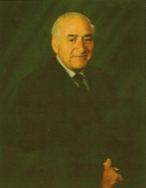
I started my studies at Monmouth University in Jan 1980.  Shortly after I started, I contacted ASAI to inform them of my status.  ASAI assisted me in the first year with Tuition and Board.  Subsequent years it was only tuition.  I was lucky enough to have had the chance to meet with Mr. Joseph Qutub, ASAI president at the ASAI headquarters in Fanwood, NJ during the first semester after he invited me to go and meet him.  Mr. Qutob met me at the train station and took me to a McDonalds restaurant for lunch.  I saw in him the caring father figure and a genuine care and interest in my wellbeing and education.  While we were having lunch and chatting about ASAI, he pointed at the guy who served us our lunch and said to me, “You see that guy over there to which I said yes.  He said to me “that is my son”.  He explained to me that he took me to that restaurant to teach me that working in America is something that most students do to earn extra pocket money while studying and it is not something to be ashamed of.  I went back after my meeting feeling encouraged and motivated to complete my 4-year degree to prove to Mr. Qutub, my family, and myself, that I am going to rise to the challenge and work very hard to get my degree.

I graduated in Jun1984 and received my BS Degree in Computer Science.  I invited Mr. Qutub to my graduation ceremony, unfortunately Mr. Qutub was not able to attend as he had a prior travel commitment and sincerely congratulated me and wished me a bright future ahead.  I returned to Jordan and worked with a couple of information technology companies before Joining the IT department with Royal Jordanian Airlines where I stayed until I migrated to Australia in 1990.

In Australia I started working 2 weeks after arrival with an international financial institution where I started as a programmer, and moved to a project manager role, then an Assistant Vice President and IT lead for the Asia Pacific region.  The duration of my employment was almost 30 years.  In early 2021 I received my redundancy package and took a break during COVID,

I need to continue working to keep active and do something that I am passionate about, which is the aviation industry.  I was lucky enough to land a Customer Service Agent role with Qantas – the regional domestic service team where I am currently employed as a permanent part-time employee.  This is my retirement job, and I am having a lot of fun with a great team and exciting environment.

Having acquired the Student Loan from ASAI back in 1979 was a turning point in my life.  I could not obtain my degree and subsequently advanced my professional career without being given the opportunity to complete my higher education.  Many doors were opened for me which helped me advance in my professional and personal development.   There are no words that can describe how grateful I am.  I will forever be indebted to ASAI. 

I am proud to be affiliated with such a reputable organization whose main goal is to help Arab students. Thank you ASAI, thank you to the leadership team, the volunteers, administrators, and everyone who is keeping it going.
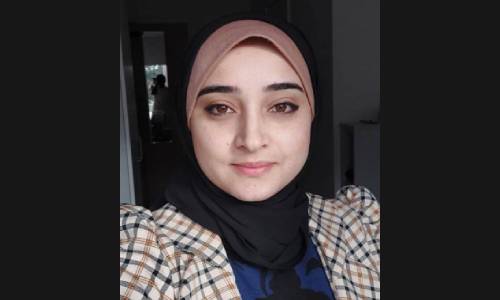

Everything is gone, but Gaza’s students are still learning

Everything is gone, but Gaza's students are still learning

Dalya Saleh

“When I return, I will sit at the cafeteria, have coffee, and cry.”

This is not nostalgia. It is a statement of survival, from a student whose university, like every other in Gaza, has been destroyed. Since 2023, Gaza’s universities have been bombed or rendered inoperable, leaving more than 90,000 students without access to formal education. Yet, learning has not stopped. It has moved to makeshift networks and digital platforms, driven by a deep commitment to education despite the devastation.

A group of computer science students from the Islamic University of Gaza created a Telegram channel that now connects over 1,200 displaced students. They exchange lecture notes, prepare for exams and support each other emotionally. 

What started as a simple way to stay connected turned into a vital educational lifeline in a place where traditional learning is no longer an option. The students involved in this initiative describe it as a form of “collaboration, not charity” – a community-driven response to the lack of formal structures.

One student, a woman working on her masters thesis, faced the problem of being unable to afford the soaring internet prices with the borders closed. With no support from official institutions, she proposed a solution: create a shared, free internet hub for other students. She launched a crowdfunding page to support the initiative.

Thanks to her efforts, and the support of donors and the local community, a space was created where over 55 students now have access to the internet, allowing them to continue their studies. This initiative is just one example of how students are finding solutions to their educational challenges, even in the absence of institutional support.

In the midst of the crisis, Gaza’s medical students have also found ways to continue their education. Unable to attend lectures or clinical rotations, they volunteer in the few remaining hospitals and medical points. These students have taken on critical roles in Gaza’s struggling health system, gaining real-world experience while serving their community. One medical student said: “We are learning from real patients, in real time. This is our education now.” 

Education is an anchor 

After Gaza’s libraries were destroyed, some students took it upon themselves to preserve what they could. One group of students began saving PDFs of articles and other resources to create a digital library. This digital archive became an essential resource for many students who no longer had access to physical copies of their required reading. With difficulties gaining institutional support, it was the students themselves who ensured that learning could continue.

Majd, a student who started university in 2023, described how she faced the overwhelming grief of living through the war. Despite the constant losses, she refused to stop learning. “I die tens of times every day,” she says, reflecting on the trauma of the ongoing war. However, Majd insists that education is her anchor. She rejects online learning, saying: “The only way to do real education is to meet people.” Majd’s story highlights the deeply personal toll of the war and how, for many students like her, education has become a form of resistance – a way to reclaim something meaningful amid the destruction.

Heba, who lost her husband and is now raising four children, enrolled in a masters program to stay connected to something productive. “I don’t even fully understand what a masters degree is,” she admits, “but I need something to keep me going.”

For Heba, the pursuit of education is more than a career step; it is a vital coping mechanism in a life marked by loss. It’s a reminder of the resilience of Gaza’s students, who are holding onto education not because the conditions allow for it, but because the conditions demand it.

 Reimagining education

 Across Gaza, students have shown extraordinary resilience. Their work, whether in digital classrooms, makeshift learning hubs or volunteer medical roles, is a testament to their unwavering commitment to education. 

They are rebuilding their educational infrastructure from the ground up, not waiting for external aid but creating what they need themselves. These are not isolated stories; they are the collective experiences of Gaza’s student community, which has transformed challenges into opportunities for growth, learning and solidarity.

Gaza’s students are showing the world that education isn’t something that survives a war – it is something that people fight to create, even when everything else is destroyed. What they are building, often in small, quiet ways, is a new educational paradigm – one that centers collaboration, community and resilience. 

In the process, they are not just preserving knowledge; they are reimagining what education can and should be.

If we are to truly support Gaza’s students, the international community must stop focusing on rebuilding outdated systems. Instead, it must listen to the voices of those on the ground who are already reshaping the future of education. Gaza’s students are the present architects of a more just and meaningful educational world. 

Dalya Saleh holds an MA in intercultural communication and education and is a research assistant at the School of Education at Durham University, England. Her work focuses on education in conflict-affected regions and intercultural learning. Prior to this, she spent over seven years in Palestine working as an English teacher and educational researcher.

This article is a commentary. Commentary articles are the opinion of the author and do not necessarily reflect the views of University World News.

Source


My Journey in Medicine: Struggles, Achievements, and a Future in Germany

My Journey in Medicine: Struggles, Achievements, and a Future in Germeny

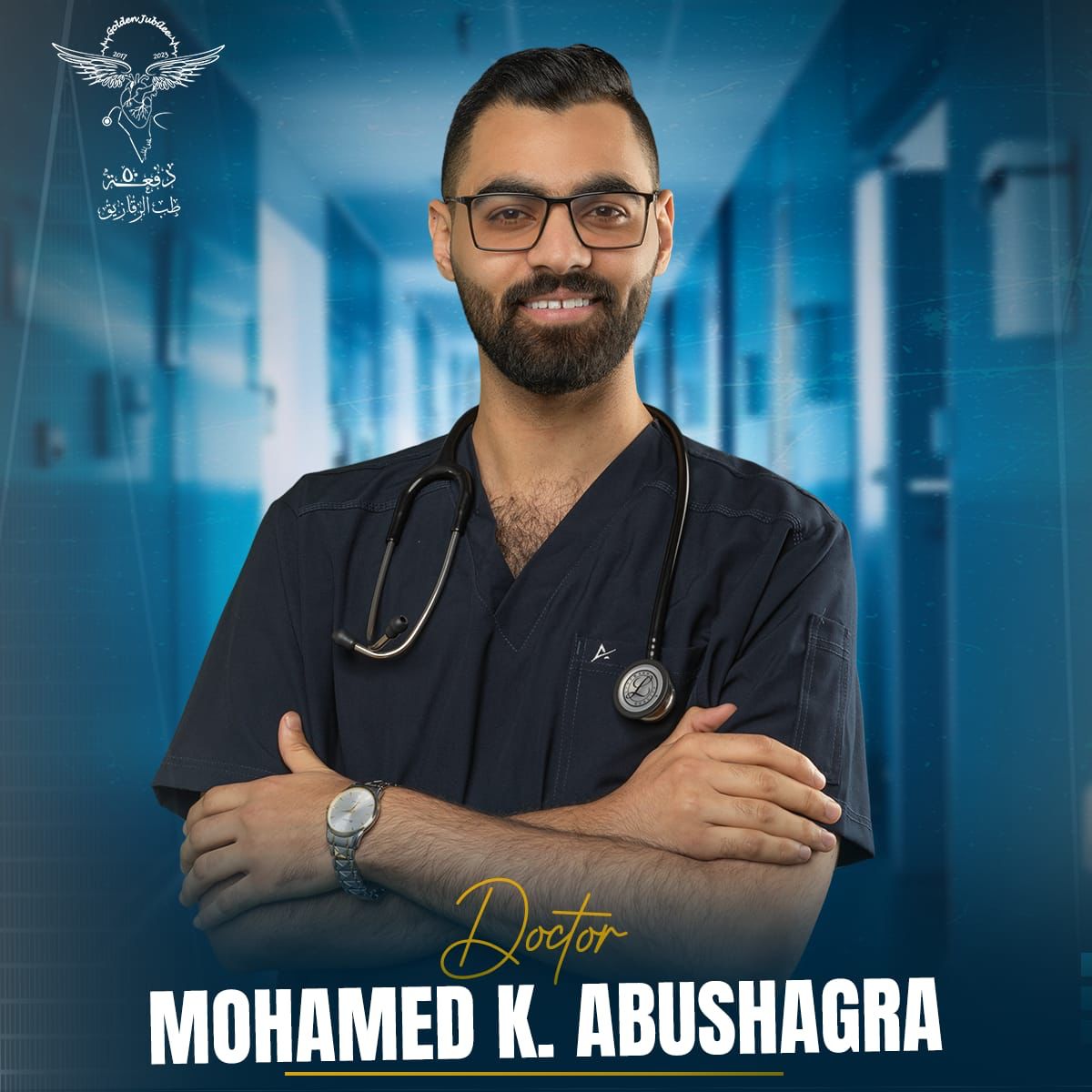
Mohammad Abu Shaqra

I am Dr. Mohammad Karam Mohammad Abu Shaqra, a graduate student from Zagazig University, holding a Bachelor’s degree in Medicine and Surgery with a distinction. From the very beginning, medicine was more than a profession to me—it was a humanitarian mission and a source of hope amidst pain and destruction. As a Palestinian student, my medical journey was far from easy. It was filled with challenges that made me realize every step toward success is a triumph over harsh reality.

The Challenges: Studying Medicine During War, from Afar

Being a Palestinian student abroad during the war was an indescribably harsh experience. I wasn’t physically present, but I lived every moment of it through the news, videos, and fragmented calls with my family in Gaza. I watched in anguish as my homeland turned into rubble and felt utterly helpless as my loved ones suffered at the heart of the conflict.

Studying under such conditions was anything but easy. My mind was torn between lectures and medical reports on one side, and breaking news and family messages on the other. How can one study to become a doctor to heal others while witnessing their people being deprived of basic healthcare? That sense of helplessness was the hardest part. But over time, I realized that my true weapon against this reality was knowledge and persistence.

Humanitarian Work: Supporting Medical Students During War

Amid all the suffering, I couldn’t remain a bystander. Many Palestinian medical students outside Gaza were enduring unimaginable conditions, trying to continue their studies amid bombardment and shortages. I joined hands with several humanitarian organizations in an initiative to support these students by providing educational materials, academic guidance, and helping them find opportunities to continue their studies despite the difficulties.

This humanitarian work was more of a moral obligation than an initiative. I realized that sustaining medical education wasn’t an individual issue but part of an entire society’s resilience. I witnessed unbreakable determination in these students and a burning desire to learn despite everything. It strengthened my belief that education is the most powerful weapon we can hold in the face of adversity.

Achievements: Holding On to Hope Amid Pain

Despite all the hardships, I never let circumstances deter me from my goal. I worked hard to become part of a healthcare system that saves lives, constantly improving my academic and practical skills. I participated in medical research and initiatives that highlighted the health challenges facing Palestinians and aimed to be a voice that communicates Gaza’s suffering to the global medical community.

This experience taught me that resistance isn’t limited to battlefields—it lives in the halls of science, in the pursuit of excellence, and in building a future that can bring real change.

Gratitude: To Those Who Stood by Me

In this challenging journey, I was not alone. I had people who stood by me and offered support at the toughest times. First and foremost, my family has been my source of strength and my biggest supporter, despite the harsh living conditions in Gaza.

I extend my deepest gratitude to the Arab Student Aid International, which played a vital role in supporting me and many other Arab students in our academic journey.

About Arab Student Aid International

Arab Student Aid International is a nonprofit organization that has supported Arab students for decades through scholarships and financial assistance, helping them continue their studies across various fields. The organization believes that education is the foundation of development and change, and thus helps ease the burden on students facing economic or political hardships.

I also owe thanks to my professors and colleagues who were like a second family to me and supported me throughout this journey. To everyone who believed in me and gave me the chance to be part of this field, thank you. Every moment of support was the fuel that kept me going despite the obstacles.

Looking Ahead: A Dream to Specialize in Germany

Today, as I work toward fulfilling my dream of traveling to Germany to begin my specialization, I feel a mix of hope and challenge. This is not just a career move—it’s a new beginning that opens doors for greater knowledge and experience. I know the road will be difficult, but I believe that hard work and perseverance will lead me to my goal.

My aim is not only to become a specialist doctor but to be an ambassador for my people’s cause—to communicate their suffering to the world, not just through words, but through science and service. I aspire to return to my homeland one day, bringing with me the knowledge and experience to help build a stronger healthcare system and contribute to a brighter future for Palestine.

In Conclusion: A Message of Hope and Determination

The journey wasn’t easy, but it taught me that obstacles are merely checkpoints for our patience and willpower. The circumstances may be harsher than we can bear, but determination creates miracles.

I will keep striving because I believe every achievement has meaning and every success holds a story—and my story is far from over.

No matter how far I go, my goal will always be to be a Palestinian doctor who carries a message of hope and humanity, wherever I may be.

A Journey of Blessings and Gratitude

A Journey of Blessings and Gratitude

How Arab Student Aid International Paved My Journey 

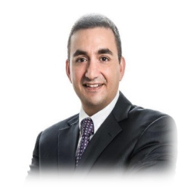
Nader Barakat

In the late autumn of 1979, I embarked on a journey that would forever change the course of my life. With little more than a suitcase, a dream, and unwavering determination, I arrived in the U.S. to pursue a degree in electrical engineering. Leaving behind my family and my beloved Palestinian homeland presented me with both financial and cultural challenges, yet I was resolute in achieving my academic ambitions.Growing up in a family of twelve children and with my father’s limited income as a high school teacher meant constant financial strain and uncertainty. Managing school tuition and living expenses became a significant challenge. With little support from some family members, I relied particularly on the immense generosity of my great-uncle in the U.S., who graciously supported me through my first two years of college. During this time, I explored financial aid opportunities. Thankfully, in the fall semester of 1981, I received my first grant from Arab Student Aid International (ASAI), a U.S.-based non-profit organization dedicated to supporting financially needy yet outstanding Arab students. Their aid was crucial to completing my college education. 

ASAI’s timely and generous support enabled me to graduate with honors in the summer of 1983, completing my four-year engineering degree in three and a half years. ASAI encouraged students to return to their home countries by stipulating that aid would be considered a grant if they did so; otherwise, it would be a zero-interest loan, payable in installments six months after graduation. 

Determined to apply my degree and acquired engineering skills, I returned home to Palestine. After a frustrating three-month job search, I decided to return to the U.S. to pursue a master’s degree – both to enhance my employability and to specialize in wireless communication.

I applied to several U.S. graduate programs, and within weeks, I received admission and secured a visa to return. Six months after arriving back in the U.S., I landed an engineering job, and soon after, my employer sponsored my U.S. residency to ensure my legal status.

In 2007, my late father called to inform me of receiving a letter addressed to me from ASAI. Overwhelmed with apprehension but with a sense of guilt, I realized I had forgotten my loan obligation to ASAI, having not returned to work in Palestine as I initially planned. 

Upon receiving the letter from my father, I immediately contacted ASAI, apologized for the oversight, and committed to repaying the loan in full. To show my utmost appreciation to ASAI, I paid the full loan amount and donated an equal sum to help ASAI support other students, just as it once supported me.

I worked as Director of Engineering for over two decades at a technology firm specializing in wireless devices and home satellite receivers. In 2005, I co-founded Xirgo (https://xirgo.com/) Technologies, a fleet management and asset tracking solutions company. 

As a start-up, Xirgo operated out of my house garage for the first year. Our breakthrough came with the development of a device that monitored driving behavior for auto insurance risk assessment. Building on this success, we later developed solar-powered GPS and cellular tracking solutions for major U.S. shipping couriers. Xirgo grew into a global leader in GPS and wireless tracking solutions. In 2021, we successfully exited, selling the company to a multinational industrial technology firm.

Bringing Innovation Home: A Commitment to Palestine

Despite the financial security afforded to me by exiting Xirgo, I chose to pursue my long-held dream of helping my homeland by introducing and promoting advanced wireless technology. 

During my visit to Palestine in the summer of 2021, I was introduced to a young entrepreneur, the founder of Snipe (https://www.snipe.ps/), a promising Ag-Tech startup developing irrigation and fertilization controllers to combat water scarcity and food insecurity. This mission deeply resonated with me. Impressed by the company’s founder and his team, I decided to invest in and manage the company. 

Over the past three years, we have revolutionized Snipe’s technology by integrating cutting-edge hardware and software solutions to improve farming efficiency and profitability.  Today, Snipe is a regional leader in precision farming, helping customers optimize the use of water, fertilizers, and energy while maximizing crop quality and yield. Despite the immense challenges of operating a business in the Israeli-occupied West Bank, we remain committed to growing and expanding the reach of the company into regional markets.

Philanthropy: A Legacy of Giving Back

Beyond my professional endeavors, philanthropy has been my most fulfilling pursuit. I believe that giving back is of the highest calling, and I’ve been blessed to support numerous charitable projects in the U.S. and Palestine, focusing on health, education, and community support.

Furthermore, I am a long-time donor and now a board member of Anera(https://www.anera.org/), a U.S.-based nonprofit organization providing humanitarian and development aid in Palestine, Lebanon, and Jordan. Over the past 16 months, Anera has been at the forefront of relief efforts in Gaza, delivering millions of meals, clean water, and medical supplies to displaced families affected by the war in Gaza. Anera’s work has been crucial in alleviating the suffering of those most impacted by this horrific war.  

Reflection: A Journey of Perseverance and Purpose

As I reflect on my journey – from an ambitious young Palestinian student in the U.S. to a technology entrepreneur and philanthropist – I feel a deep sense of gratitude. First and foremost, I’m grateful to my parents for their unwavering guidance and the values they instilled in me from a very young age. Second, I am grateful to ASAI for its invaluable financial support, which enabled me to complete my college education, an opportunity that set the foundation for my career and life’s purpose.

Looking back, those early years in the U.S. were a testament to the power of perseverance, discipline, and determination. They shaped who I am, my career, the values I hold dear, and my commitment to giving back to my family, community, and homeland.

My journey, which began with a single step across an ocean, continues to inspire me to strive for excellence and to help others achieve their dreams, just as ASAI once did for me.